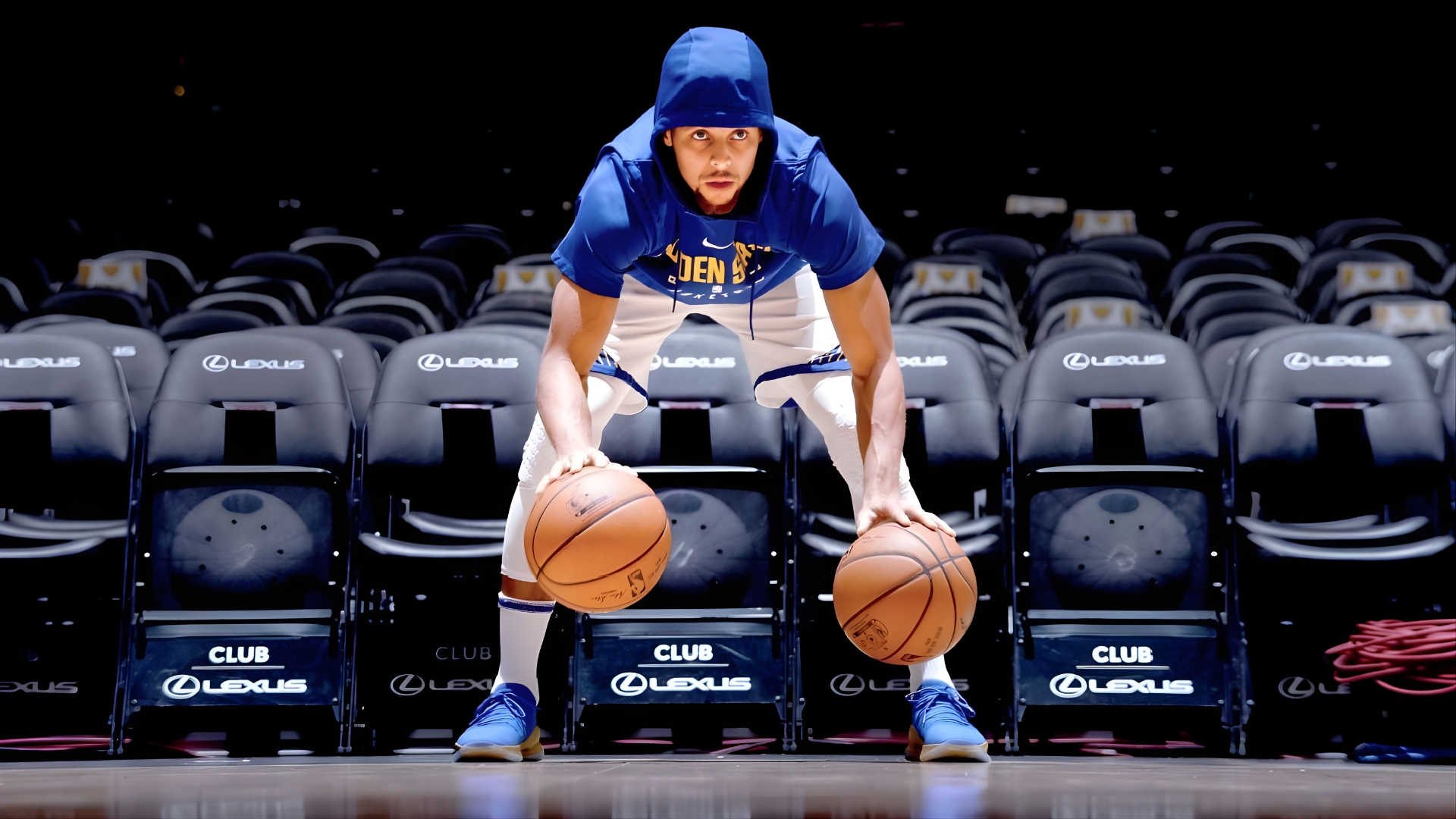


There’s a strange moment that happens when you’ve been around greatness long enough: the extraordinary starts to feel ordinary. After two decades around basketball’s elite, I still catch myself forgetting just how rare that environment truly is. The work ethic. The pressure. The demand for presence.
I was reminded of this during a recent trip to Washington, D.C., where I had two events for two very different organizations — one at 10 AM and another at 6 PM. Two different rooms. Two different cultures. Two different sets of expectations.
And the real challenge wasn’t the content. Because of my basketball background I feel like I prepare meticulously. The real challenge was the reset.
The Reset Between the Reps
Most people think elite performers separate themselves through volume — more shots, more hours, more effort. But once an athlete reaches a certain level, the advantage shifts. The edge stops coming from physical reps and starts coming from the mental game.
I once asked one of the top 3-point shooters in the NBA what caused him to miss. His mechanics were nearly flawless. He was consistently on SportsCenter. His shot volume was sky-high.
His answer?
“The only time I miss is when my mind isn’t there.”
Not when his form slipped.
Not when he was tired.
Only when his attention drifted — to the last shot, the next possession, or something unexpected on the court.
The margin of error at that level is measured in milliseconds of mental noise.
This is the same razor-thin margin leaders face today.
Why the Mental Game Is the Leadership Game
Between my two events, I knew I had to manage my state like a player on a back-to-back.
So I took a walk through D.C., ubered out to Falls Church and when I got to my hotel room dropped immediately into a reset ritual: NSDR/Yoga Nidra, breathwork, a short yoga flow, and a cold shower.
Not because I was tired.
Because I wanted to be fully present for the next room.
Presence is not a mindset. Presence is a physiological state.
And leaders are learning fast that mindset is downstream of the nervous system.
New research is beginning to make this crystal clear:
- Research in Harvard Business Review shows that specific breathing protocols can rapidly reduce physiological stress and improve clarity and decision-making under pressure.
- Neuroscience work from Stanford, popularized by the Huberman Lab, highlights how simple tools like cyclic sighing can quickly shift the nervous system into a more calm and focused state.
- McKinsey points out that practices such as mindfulness, sleep, and recovery are now seen as core performance levers in high-intensity organizations, not perks, but strategic essentials for sustainable leadership effectiveness (McKinsey & Company).
- The American Psychological Association underscores how psychologically safe environments—where people feel secure speaking up and taking interpersonal risks—are tightly linked to learning, innovation, and performance.
In other words:
You don’t wing presence. You train it.
Where Confidence Really Comes From
The morning event went great.
The evening event hit even deeper.
Not because I did anything radically different.
But because I was different.
Preparation creates confidence.
But your ability to shift your state — to get fully locked in — is what allows the preparation to express itself.
This is why the Navy SEALs say:
“You don’t rise to the occasion. You default to your level of training.”
In leadership, training isn’t just about skills. It’s about learning how to regulate your own internal world so your best self is available on demand.
That reset between events wasn’t a luxury. It was a return to myself — a way to realign, reset, and show up grounded and fully present for the people in the room.
The Hidden Skill Every Leader Needs
The coaching clients I work with — from pro athletes to business leaders — all face the same challenge: How do you stay present when everything is pulling your attention away?
The answer isn’t doing more.
It’s learning how to reset faster.
Not at the end of the quarter.
Not after the next fire drill.
But between the metaphorical 10 AM and 6 PM of your day.
The leaders who master this skill don’t just perform better. They create teams who feel safer, think more clearly, and execute with fewer errors — outcomes backed by research from the American Psychological Association on the link between psychological safety and peak performance psychological safety.
Presence isn’t soft. Presence is a performance multiplier.
Why Organizations Are Bringing in a Keynote Speaker on Mindful Leadership
After every event this year, I hear a similar sentiment from CEOs, COOs, and HR leaders:
“We don’t need more strategy. We need our people to be able to think, regulate, focus, and connect again.”
That’s why more organizations are searching for a keynote speaker on mindful leadership — someone who can bridge human performance, neuroscience, and real-world leadership pressure.
This is the work I’m most obsessed with: Helping leaders operate with more awareness. Lead with presence. And access their highest level of performance when it matters most.
The Real Edge
Standing backstage at 5:58 PM in that second event, I felt the same thing I’ve watched elite athletes experience for years — that quiet confidence that shows up when preparation meets presence.
The reps mattered.
The research mattered.
But the reset made the difference.
Leadership isn’t about doing more.
It’s about training yourself to access the moment where your excellence lives.