

Key takeaways
- To trust the process means focusing on the daily work you control and trusting it to produce results over time, even before the results show up.
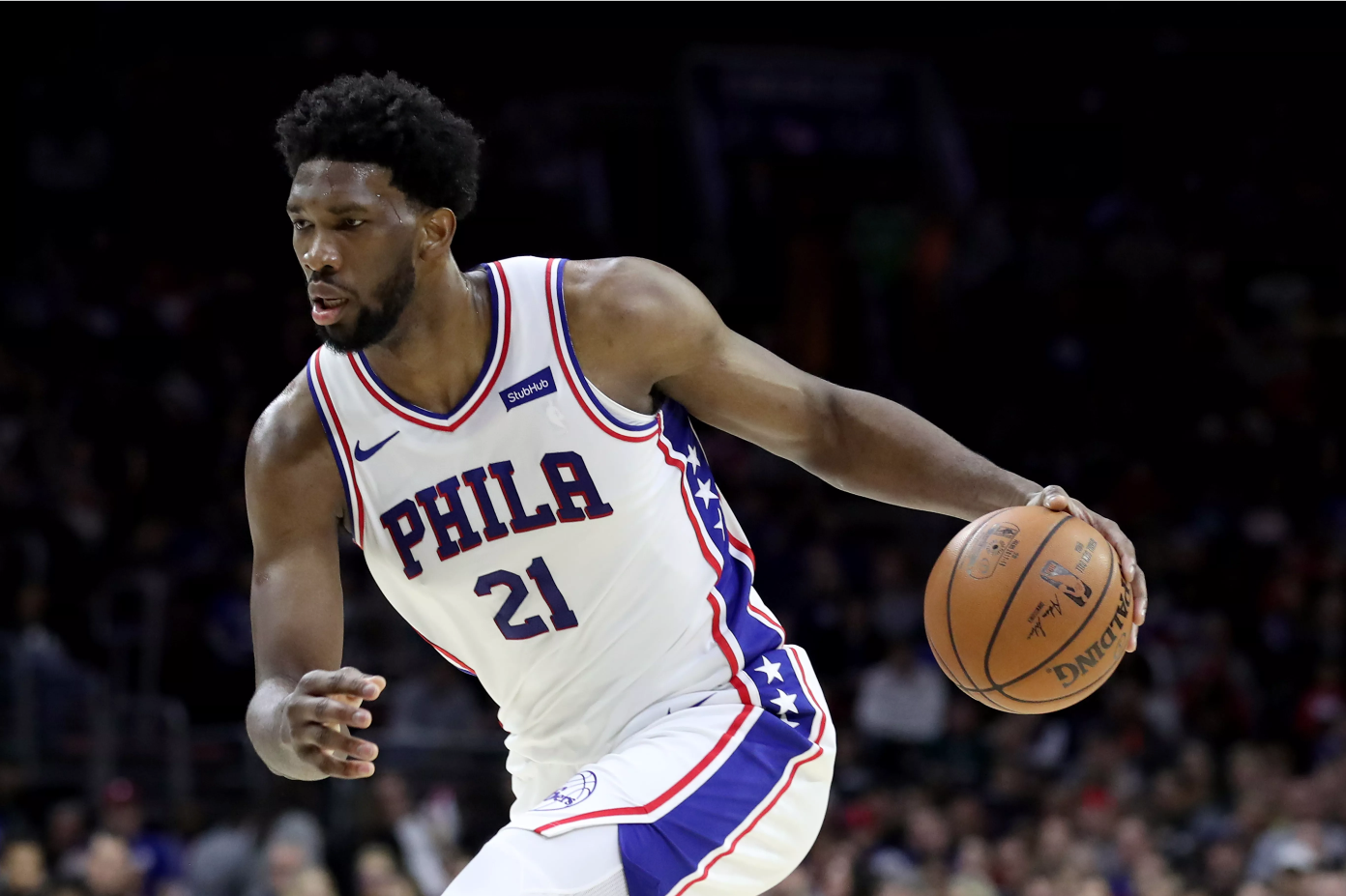
- The phrase came out of the Philadelphia 76ers rebuild under GM Sam Hinkie, and it became Joel Embiid’s nickname.
- In 2012, a teenage Embiid rode the bus an hour each way to our workouts and always asked for “one more.”
- For leaders, the process builds discipline, consistency and momentum, and those compound into results.
What Does “Trust the Process” Mean?
To trust the process means committing to the daily work you control and trusting that it will produce results over time, even when the scoreboard doesn’t show it yet. You judge yourself by the quality of your effort and decisions, not by today’s outcome.
The phrase is tied to the Philadelphia 76ers. When Sam Hinkie became general manager in 2013, he started a long rebuild built on decisions that could take years to pay off. In his 2016 resignation letter, he wrote that good decision-making requires you to “divorce process from outcome.” The exact words “trust the process” came from guard Tony Wroten, who told ESPN in January 2015 that the team heard it “every game, every day.” Fans turned it into a chant, and Joel Embiid, the 76ers’ 2014 draft pick, took “The Process” as his nickname.
I saw what trusting the process looks like up close, two years before the 76ers drafted him.
Training a Teenage Joel Embiid
In the summer of 2012, I was in my hotel room at the Hampton Inn after running a basketball camp in a small town called Onalaska, WI. And I received a phone call from an unknown number. This was before Robocalls, so I actually picked up the phone!
On the other line, it was Luc Mbah A Moute, who was playing for the Milwaukee Bucks at that time. He had gotten my number because an assistant coach from the Bucks was a mentor of mine and referred our skill development training business to him. Luc went on to tell me that he was going to have a couple of teenagers from Africa living with him this summer, his brother Roger and another kid. He was wondering if I would be willing to work these kids out while they were in town. I specifically remember him saying to me, “they’re not very skilled, but I think they could be pretty good players.”
So a couple of weeks later I pulled up to Luc’s apartment in the Brewer’s Hill neighborhood of Milwaukee, which overlooks downtown. I was there to pick up the kids Luc had staying with him to take them to our gym to get a workout in. I texted Roger to let him know I was there and a couple of minutes later these two tall, gangly kids from Cameroon came out of Luc’s townhome. They barely fit into my little four-door Acura TL. One of them, who was approaching 7 feet tall squeezed into the front seat. I hardly knew anything at all about these kids except that they loved basketball and wanted to work on their game.
We got to the gym, got our shoes laced up, and got warmed up for the session. Shortly after we started I knew something was different about this 7 footer. He asked questions about the littlest details. He was incredibly present. He was focused on the footwork on a move, the form on a shot, or the details of a ball-handling drill.
I knew almost immediately that this kid was going to be special. But just to confirm, I called over Jerry Smith, a Milwaukee native playing in Europe, who was getting warmed up on the other side of the gym for the next workout. I could see Jerry out of the corner of my eye just observing this kid, wondering “who is that? That kid is not from Milwaukee”. He had played against several NBA players in his time at Louisville, was a D-League All-Star, and had also played a 10-day contract in the NBA. He had a ton of experience playing against really high-level players.
I said to him, “Jerry, what do you think? Is this kid for real?”
He smirked, laughed a little bit, “Yeah…that kid’s going to be a lottery pick for sure.”
On days when I couldn’t pick him up and take him to the gym he’d get a bus pass and ride an hour each way in a city he didn’t know — let alone a country he didn’t know he didn’t know — just to get to the workouts. The improvements that this kid made, in the 2 months that I spent with him, were incredible. He loved the work and he loved details. He kept coming back, working on his game and focusing on one mindset we were really trying to instill in our players at that time.
The power of the process.
He was completely bought in.
As each workout ended it was difficult to get him off the floor. When I told him the next group had to start their workout, he’d look at me palming the ball in one hand and the other hand holding up his larger-than-life index finger saying, “Coach, one more.”
This tall gangly kid from Cameroon was Joel Embiid. He went on to play at the University of Kansas, was the 3rd pick in the 2014 NBA Draft, and has gone on to become a seven-time NBA All-Star, the 2023 NBA MVP and a 2024 Olympic gold medalist with Team USA.
What Trusting the Process Means for Leaders
The challenge we face — whether it’s the basketball arena or the business space — is that we live in an outcome-based world where we glorify the results, but cast a shadow on the journey. We cast a shadow on the empty gym and the dark arena, the hours spent dripping in sweat when no one is watching, whatever that arena might be for you, and glorify the championships. But the process, the work, is the only thing we can control, that might influence the outcomes. Because when we focus on the process we build discipline, consistency and momentum. And, these three things create a compounding effect on the external results.
For leaders, trusting the process means you set the vision, lock in on the daily work and let go of trying to control every outcome. You can’t control the market, the quarter or other people’s choices. You can control your preparation, your standards and how you show up today. I wrote more about that in control the controllables: what leaders actually control.
In practice, that looks like this:
- Measure the inputs your team controls, like reps, calls or coaching conversations, along with the results.
- Recognize the work people do when no one is watching, not only the wins.
- Stay consistent when results lag. Momentum usually shows up after the work.
Frequently Asked Questions
What does “trust the process” mean?
It means committing to the daily work you control and trusting it to produce results over time, even before those results show up. The focus is on the quality of your work and decisions, not on any single outcome.
Where did “trust the process” come from?
The phrase is tied to the Philadelphia 76ers rebuild under general manager Sam Hinkie, who took over in 2013. Guard Tony Wroten told ESPN in January 2015 that the team heard “trust the process” every day, and fans and Joel Embiid made it famous.
Did Mike Lee train Joel Embiid?
Yes. In the summer of 2012, Mike Lee ran workouts with a teenage Joel Embiid for about two months, before Embiid played at the University of Kansas and was the third pick in the 2014 NBA Draft.
How can leaders trust the process?
Set a clear vision, focus your team on the daily work they control, and stay consistent when results lag. Discipline, consistency and momentum compound into results over time.
Let’s Get to the Next Level. Together.
If you want help building that kind of process for yourself and your team, that’s the work I do with leaders 1:1. Apply for coaching here. The first call is on me. For events, see my peak performance keynote or drop us a note.