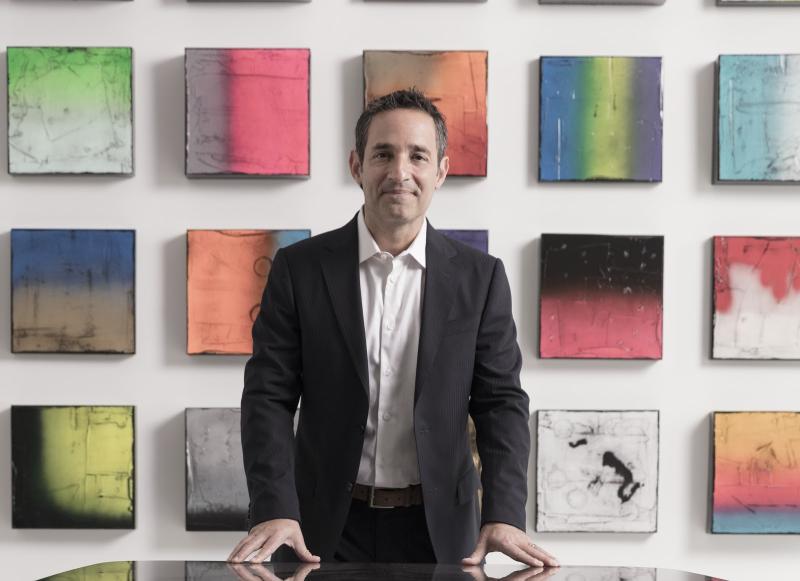


“When you frame up mindfulness as an avenue to level up leadership and performance, well-being is a natural by-product.”
When I picked up a mindfulness practice to help me move through the adversity of withdrawing from a pharmaceutical medication I had no idea it would amplify skills vital to leadership and performance like focus, self-awareness and presence. After a couple of months of consistent mindfulness meditation, I realized why elite athletes like Kobe Bryant, visionary CEOs like Steve Jobs, and luminaries like Oprah all had some form of a meditation practice.
Just like an exercise program changes your body, a meditation practice trains your mind. Studies from Sara Lazar’s lab at Massachusetts General Hospital found that experienced meditators had a thicker cortex in areas tied to attention, and that people whose stress dropped after an eight-week mindfulness course also showed changes in the amygdala, the brain’s alarm system. A larger 2022 trial didn’t find those structural changes, so the brain-scan science is still open. What’s better established is the effect on attention and stress, and that matches what I felt. The less reactive you are to stress and distraction, the more present you are for the task in front of you.
Simply put mindfulness has had a profound impact on my life and my work. It’s something I continue to study and implement to this day. One person that I’ve been learning from is former EY Americas Mindfulness Leader Clif Smith, who joined me on The MindShift Lab.
A US Army veteran, former diplomat and intelligence officer, Clif served as EY’s Americas Mindfulness Leader and is internationally recognized for bringing mindfulness into the corporate world. He brings over 25 years of experience leading through high-pressure situations into his teachings and demonstrates the value of adopting mindfulness as a fundamental part of our personal and professional lives. Following his passion for developing others, he built EY’s Mindful Leadership program, which has trained over 150,000 people. He now works in the U.S. Defense Department.
“Life does deal us a set of cards in the beginning that we cannot change, but we get to make our own decisions about how we are going to respond to life; mindfulness moves us from an automatic reaction to a thoughtful response.” – Clif Smith
We talk about why mindfulness can be used in a completely secular way as a cutting-edge tool to level up your leadership, performance and well-being by training your attention, awareness and focus. He also shares why you don’t have to be at rock bottom or have an underlying condition to implement a practice. Additionally, Clif talks about what’s in his book, Mindfulness Without the Bells and Beads, released by Wiley on April 20, 2021. Grab your coffee and let’s dive in.
Mindfulness Without the Bells and Beads is Clif Smith’s book (Wiley, 2021). In our conversation, Clif and I talk about using mindfulness at work to lead and perform better, with no spiritual beliefs required.
Key takeaways
- Mindfulness at work is attention training: notice where your mind went, then bring it back.
- You don’t need bells, beads or any belief system to practice it.
- Clif Smith built EY’s mindful leadership program and wrote Mindfulness Without the Bells and Beads (Wiley, 2021).
- A few minutes a day works better than one long session a month.
How to Practice Mindfulness at Work (Without the Bells and Beads)
You practice mindfulness at work by training your attention in short, plain reps: notice where your mind went, and bring it back to the task or person in front of you. You don’t need a bell, a cushion or a belief system, which is the whole point of Clif’s book.
Here are three ways to start this week:
- Ten breaths before your first meeting. Count ten slow breaths and make each exhale as long as the inhale, or longer. When your mind drifts, start the count again. That restart is the rep.
- Listen to one sound for 30 seconds. Between calls, pick one sound in the room and stay with it. Listening is one of the fastest ways back to the present.
- Notice the trigger. When an email lands hard, notice the tight chest or the urge to reply right away. Take one breath before you type.
Clif’s book lays out an eight-week approach. If you want the leadership side, see my mindful leadership keynote.
Frequently Asked Questions
Who wrote Mindfulness Without the Bells and Beads?
Clif Smith, a U.S. Army veteran, former diplomat and intelligence officer, and EY’s former Americas Mindfulness Leader, who now works in the U.S. Defense Department. Wiley published it in April 2021.
What does “without the bells and beads” mean?
It means practicing mindfulness without rituals, spiritual language or beliefs. It’s attention training you can use at work.
How do you practice mindfulness at work?
In short reps through the day: a few slow breaths before a meeting, listening fully to one person, and noticing the urge to react before you respond.
Bring mindfulness to your team
Mike brings practical, no-bells mindfulness to leadership teams and conferences as a mindfulness speaker.