

Key takeaways
- To control the controllables means putting your energy into what you can change and letting go of the rest.
- Most leaders think they control far more than they do. The real list is short: your state, your work and your response.
- Trying to control outcomes creates stress, and stress blocks your best performance.
- You control the work. Not the outcome.
A few years ago, during the omicron surge, I woke up on New Year’s Day to an event being postponed.
Happy New Year.
It wasn’t the first time. Event cancellations and postponements had been rolling in for weeks. And it was a moment to practice what I preach: stay calm and centered in the middle of chaos, constant change and nonstop disruption.
Am I perfect at it? Nope. But I’ve learned that most of us have “control the controllables” backwards. We think the list of things we control is long. It’s much shorter than we think.
What does “control the controllables” mean?
To control the controllables means you put your time, energy and attention on the things you can actually change, and you stop spending them on the things you can’t. It’s a phrase coaches have used with athletes for decades, and it works just as well for leaders.
Understanding it is easy. Being honest about what’s actually on the list is the hard part.
March 2020: the gap between what I thought I controlled and what I actually did
Back in March 2020, like many of you, my entire calendar got wiped clean. Overnight I was thrown into the unknown.
When adversity shows up, I try to step into a place of growth and ask, “What can I learn?”
Here’s what I learned that year. There was a massive gap between what I thought I could control and what I actually could.
And I wasn’t alone:
- Some of us had live event businesses that were flourishing.
- Maybe you were an artist just about to take off on your first tour.
- Or maybe you had just left your job to pursue your passion, like two of my friends did that March.
None of us did anything wrong. The plan was good. The work was good. The outcome was never ours to control.
For many of us, we had to let go of our attachment to certain outcomes, or at least put them back on the shelf for a while. So I started a daily practice of letting go of my need for things to turn out a certain way. That way I could stay open and be of service, even if it didn’t look the way I had imagined.
Why trying to control everything hurts your performance
When you’re attached to an outcome you can’t control, you create resistance. Resistance leads to stress. And high levels of stress block the flow of high performance.
The research backs this up:
- Not knowing is often harder than bad news. In a 2016 study in Nature Communications, researchers at University College London found people were more stressed when they had a 50% chance of a painful shock than when they knew for certain they’d get one (UCL summary).
- Feeling in control protects you. In a 2026 study in eLife, people who were given a stronger sense of control handled a stressful task that came after it better than a comparison group did.
- It helps you solve problems. A 2025 study in Communications Psychology followed 1,778 adults. On days people felt more control over their stressors than usual, they were more likely to resolve them.
- Most of what we worry about never happens. In a Penn State study of people being treated for generalized anxiety, 91% of their worries did not come true.
This still shows up at work today. In APA’s 2025 Work in America survey, 54% of U.S. workers said job insecurity has a significant impact on their stress.
So the goal is to stop wasting energy on what you never controlled in the first place, and put all of it into what you do.
What leaders can actually control
In basketball, I trained point guards to read defensive coverages. You can’t control the coverage the defense throws at you. You can control how well you read it and how ready your skills are when you see it.
Leadership works the same way. You can’t control the market, the economy, a client’s decision or what happens at the next board meeting. Here’s what’s actually on your list:
- Your state. Your energy, your focus and your presence when you walk into the room. You’ll never outperform your internal state.
- Your work. The preparation, the process and the standards you hold. You control the work. Not the outcome.
- Your response. What you do in the next moment after a setback, a bad meeting or a canceled deal.
Notice what’s not on the list: other people. You can influence your team, your clients and your board. You can’t control them. Operate with the intention to influence, not control. Control is an illusion.
How to control the controllables: one practice that works
One thing that helped me move through the adversity of COVID was repeating a simple phrase to myself:
“I know nothing.”
I step into each day with the humility that billions of things have shaped this moment, and I have no control over almost all of them.
That 2018 business deal could have fallen through. The driver who was out drinking on New Year’s Eve 2019, the one I didn’t even know passed me, could have hit me. Everything has always been uncertain. A crisis just makes it obvious.
Your ego will push back on this hard, because it means letting go of control. But on the other side is freedom.
Here’s how to put it to work:
- Start with what’s in your control. When you start your day with things outside your control, you react. When you start with things inside your control, you take intentional action.
- Sort the problem. Take the thing keeping you up at night and split it into what you control, what you can influence and what you can’t touch.
- Say “I know nothing.” When you catch yourself replaying every possible outcome, use the phrase to drop the need to predict the future.
- Go back to the work. Ask what the next right action is, and do that. Then do the next one. Moment by moment.
The takeaway
Controlling the controllables starts with being honest that the list is short. Then you own every item on it. Your state. Your work. Your response.
Do the work. Let go of the outcome. That’s where the freedom is, and it’s where your best performance comes from.
If you’re a leader carrying a lot of uncertainty right now, this is the work I do with leaders 1:1. Apply for coaching here. The first call is on me.
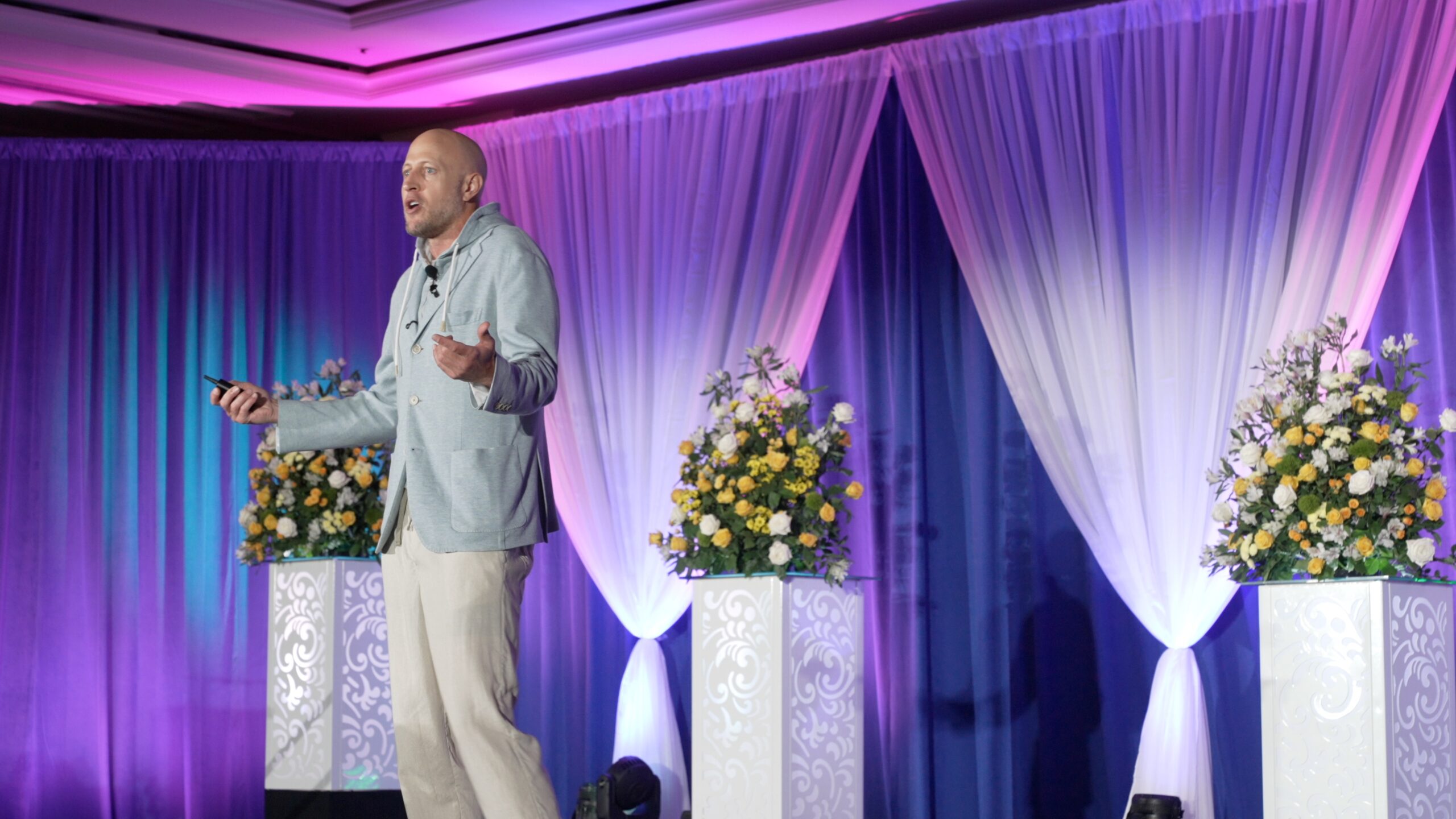
Planning an event for a team heading into a year of change? This is also the heart of my peak performance keynote. Check availability.
Related: Presence Under Pressure: How Leaders Perform When It Counts · The Inner Game of Leadership Under Pressure · Trust the Process: What It Means, From Joel Embiid’s Trainer · How to Elevate Influence and Impact as a Leader
Frequently Asked Questions
What does controlling the controllables mean?
It means putting your energy into the things you can actually change, like your effort, your preparation and your response, and letting go of the things you can’t. It’s a mindset that comes from sports and works just as well in leadership.
Who said “control the controllables”?
No one person owns it. Coaches and sport psychologists have used the phrase for decades, and it’s now common in business and the military.
What are the controllables for a leader?
The list is shorter than most people think. A leader controls their own state, the quality of their work and how they respond. Everything else, including other people, you can influence but not control.
What are the 7 controllables?
There’s no official list of seven. Most sports versions include things like attitude, effort, preparation, body language and how you respond to mistakes. All of them fit inside three buckets: your state, your work and your response.
How do you control the controllables when everything feels uncertain?
Start your day with what’s in your control, sort each problem into what you control, what you can influence and what you can’t, then take the next right action. A simple phrase like “I know nothing” can help you let go of trying to predict the future.