

Key takeaways
- What does it mean to be present? It means bringing your attention and energy to this moment and focusing on what matters most.
- Presence is the doorway to flow, the base of trust with your people and the fastest way to lower stress.
- Results are built or broken moment by moment, in how you show up.
- Presence is a skill. You can train it, and in a world of AI and distraction, it’s the human edge.
The problem: we’re everywhere except here
Most of us are never fully where we are. We hear “be present” all the time, but few people can explain what it means to be present, or why it matters so much for how we perform and lead.
We sit in a meeting and answer an email. We have dinner with our family and check our phone. We lead a one-on-one while thinking about the next three things on our calendar. We’re in the room, but we’re not really there.
This isn’t a personal failing. It’s the world we live in. The platforms we use every day are designed to keep our attention, and they’re very good at it.
The research backs this up. Harvard researchers Matthew Killingsworth and Daniel Gilbert found that people spend 46.9% of their waking hours thinking about something other than what they’re doing. And a wandering mind was also a less happy mind.
It’s gotten worse since then. Gloria Mark at UC Irvine has tracked how long people stay on one screen before switching. In 2004 it was about two and a half minutes. Today it’s about 47 seconds. Her research also links that constant switching to higher stress.
Now add AI. Work is moving faster than ever. There’s more information, more tools, more change and more pressure to keep up. Everyone is running, and very few people are present.
Here’s the cost. When we’re not present, we react instead of lead. We make rushed decisions. We miss what our people are really telling us. We burn energy on the past and the future, and we have little left for the one moment where anything actually gets done.
That moment is now. It’s the only place we can perform, connect or lead. And it’s the place most of us are missing.
What does it mean to be present?
Being present means bringing your attention and energy into this moment and focusing on what matters most. It’s the task in front of you, the conversation you’re in or the person across the table, without your mind drifting to the past or the future.
People hear “presence” and think of something soft. Sitting still. Clearing your mind. That’s not how I see it.
Here’s how I define presence: bringing your attention and energy into the present moment to focus on what matters most, with the awareness to choose how you show up.
Presence has three parts:
- Attention. Where your focus is right now. Is it here, or is it stuck in yesterday’s meeting or tomorrow’s deadline?
- Energy. The state you bring into the moment. Your psychological state and energy drive your performance. Build your state and results follow.
- Intention. The awareness to choose how you show up, instead of running on autopilot. Presence lets you operate with a high level of intentionality.
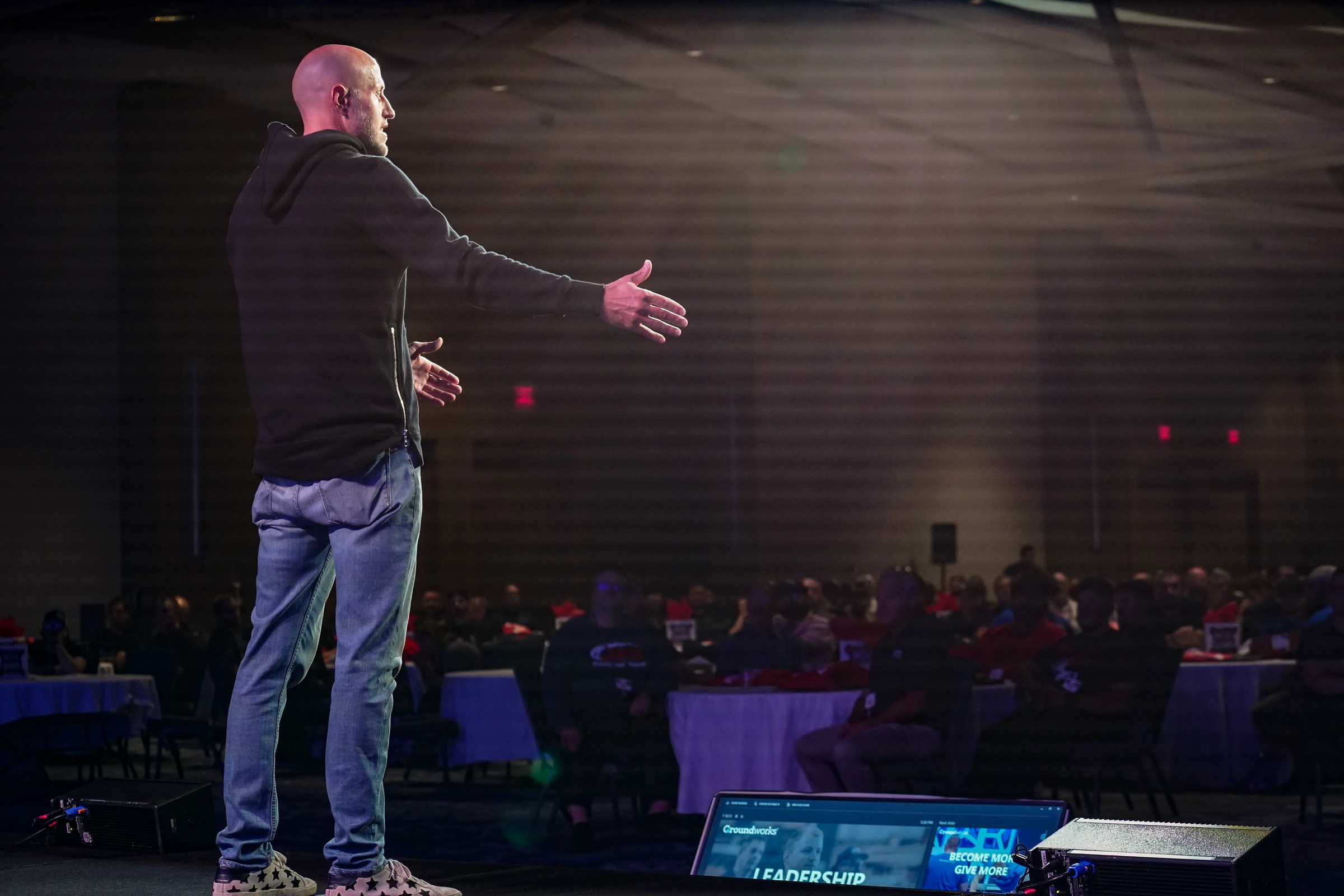
I call this the architecture of presence. Peak performance isn’t built someday. It’s built in the present moment, through intentional action, one moment at a time.
I learned this on the basketball court long before I had words for it. I spent 15 years in elite basketball, coaching players including Joel Embiid and serving as assistant director at Steph Curry’s first skills academy. The best players weren’t just talented. They were the hardest workers, and they were fully locked in to the moment in front of them. Later, Eastern philosophy and mindfulness practice gave me the language for what I’d seen on the court.
But I didn’t really understand presence until I lost it.
A health crisis took me out. My energy was gone, and my self-trust was shattered. I had lost the ability to be present. So I did what I had always done as a coach and a competitor. I pushed harder. It only made things worse.
The old playbook didn’t work anymore. I couldn’t fix everything at once, so I stopped trying. I focused on the one thing in front of me. The next breath, the next step, the next small choice. I rebuilt, moment by moment.
Mindfulness and Eastern philosophy stopped being ideas for me and became tools I used every day to get my life back. Practicing awareness, acceptance, forgiveness and surrender, and then focusing forward, is how I built my own presence. And along the way I saw what I teach today: performance only happens in the present moment, and presence is a skill anyone can build.
That’s why presence isn’t a wellness topic for me. It’s a performance skill. Mindfulness is one of the foundations, combined with mindsets and strategies from sports performance psychology. And like any skill, it can be trained.
Presence and flow state
Flow is that state where you’re fully absorbed in what you’re doing. Time seems to disappear. The work feels easier, and you do your best work without forcing it. Athletes call it being in the zone.
You can’t jump straight into flow. Presence is the doorway.
Flow only happens when your attention is fully on one thing. Every time you switch to your phone, your inbox or a worry about tomorrow, you break the chain. You have to start over. With attention shifting every 47 seconds, most people never get deep enough to find flow at all.
I saw this every day in basketball. The best shooters didn’t think about the last miss or the scoreboard. They were locked in on this shot, this possession. Their bodies did what they’d trained to do because their minds weren’t in the way. The game slowed down for them.
That’s the lesson for leaders and teams. Don’t let the game speed you up. When pressure rises, most people rush. They think about everything at once. The people who perform best slow down inside and focus on the one thing that matters right now.
To get into flow more often:
- Protect your attention. Block focused time with no phone, no notifications and no tabs you don’t need.
- Pick one thing. Decide what matters most in this block of time and give it everything.
- Manage your state first. Take a few slow breaths before you start. Your energy sets the ceiling for your focus.
- Let go of the last moment. A bad meeting or a missed shot is over. Bring yourself back to what’s in front of you.
I go deeper on this in Peak Performance Lives in the Present.
Presence in leadership: being there for your people
Your people can tell when you’re really with them. And they can tell when you’re not.
Think about the last time a leader gave you their full attention. They put the phone down. They listened to understand, not to respond. You walked away feeling seen. Now think about the last time someone nodded along while glancing at their screen. You walked away feeling like you didn’t matter.
That’s the difference presence makes. When a leader is present, their people feel it as care, compassion and empathy. You don’t have to say “I care about you.” Your attention says it for you.
This is where trust is built. People open up to leaders who are present. They share the real problem, not the polished version. They bring ideas forward. They take risks because they know they’ll be heard.
Present leaders also make better decisions. They notice what’s not being said. They pick up on the tension in the room before it turns into a bigger problem. They respond with intention instead of reacting to the noise.
A few ways to lead with more presence:
- Give one conversation your full attention. Phone face down, laptop closed, eyes up.
- Listen past the words. Pay attention to tone, energy and what someone isn’t saying.
- Pause before you respond. A short pause gives you room to answer with intention instead of reacting.
- Arrive before you start. Take one breath before you walk into a meeting and leave the last one behind.
Presence and stress
Most stress doesn’t live in the present moment. It lives in the past and the future.
We replay the conversation that went wrong. We worry about the quarter, the board meeting or the reorg. Our body reacts as if all of it is happening right now, even though none of it is. In this moment, there is usually just one thing to deal with. And one thing is manageable.
Presence brings you back to that one thing. It doesn’t make the pressure go away. It changes how you meet it.
The tool I teach for this is the Decision Gap. It’s the space between what happens and how you respond. Most people have almost no gap. Something triggers them and they react right away. The goal is to widen that space so you can lead from intention instead of emotion. It takes three steps:
- Create awareness of the trigger. Notice the moment you start to get pulled. Your chest tightens, your thoughts speed up, you want to fire back.
- Detach emotionally. Take a breath and step back from the feeling. You are not your frustration. You can feel it without letting it drive.
- Get objective. Look at the situation as it really is. What do you know? What matters most? What’s the best next move?
When you practice this, stress stops running the show. You still feel the pressure, but you get to choose what you do with it. That’s what it means to stay present under pressure.
For more on leading through high-pressure moments, read Presence Under Pressure: How Leaders Perform When It Counts.
Moment by moment: how the future gets built or broken
We like to think big outcomes come from big moments. The keynote, the launch, the deal, the game-winning shot. But big moments are just the result of thousands of small ones that came before.
Every outcome a company wants is created or eroded moment by moment. Engagement. Trust. A sense of belonging. Hitting your numbers. Peak performance. None of these are built in a strategy offsite. They’re built in how a leader shows up in the next conversation, the next meeting and the next decision.
One distracted moment doesn’t seem like much. But stack them up. A leader who half-listens in every one-on-one. A team that multitasks through every meeting. Over a year, that’s how culture erodes and results slip, and nobody can point to the moment it happened.
The opposite is also true. Moments of presence compound. One focused hour. One conversation where someone feels heard. One pause before a reaction. Stack enough of those and you build a team that trusts each other and performs when it matters most.
It’s not about the hours. It’s about the quality of presence you bring to the hours.
The future isn’t something that just happens to you. You build it in the present, one moment at a time. That’s why I say the future belongs to the present.
Why presence is the answer, and what it gives you
AI can copy almost anything. It can write the report, build the deck and analyze the data. What it can’t copy is a leader who is fully there for their people, who stays calm under pressure and who makes clear decisions when it counts.
That’s the human edge. In a world of AI and constant distraction, presence is the ultimate competitive advantage.
And presence is a skill. You don’t have it or not have it. You train it. The same way an athlete trains their body, you can train your mind. A few minutes of practice every day, applied in real moments at work, changes how you lead.
Here’s what you get when you build it:
- Better focus. You get into flow more often and do your best work in less time.
- Less stress. You stop living in the past and the future and deal with what’s in front of you.
- Stronger relationships. Your people feel seen and heard, and trust grows.
- Clearer decisions. You respond with intention instead of reacting under pressure.
- More energy. You stop leaking energy into worry and distraction, so you have more for what matters.
- Better results. All of it compounds, moment by moment, into a team that performs when it matters most and a business that grows.
The world isn’t going to get quieter. The noise will keep growing and the pace will keep speeding up. The leaders who win won’t be the ones who run the fastest. They’ll be the ones who know how to be fully here.
The future belongs to the present.
If you want to bring this to your leaders and teams, my Architecture of Presence keynote is built around it. Reach out here to talk about your event.
Frequently asked questions
What does it mean for a person to be present?
A present person has their attention on what’s happening right now, not on their phone, their last meeting or their next worry. You can feel it when you talk to them. They listen, they respond to what you actually said and you walk away feeling heard.
What is the difference between presence and mindfulness?
Mindfulness is a practice you use to train your attention. Presence is the result you bring into real moments: the meeting, the conversation, the decision. Mindfulness builds the skill, and presence is how it shows up in your work and life.
Why is being present important at work?
Work only gets done in the present moment. When you’re present you focus better, get into flow more often, make clearer decisions and build more trust with your team. When you’re not, you react instead of lead.
What does being present mean in a relationship?
It means giving the other person your full attention when you’re together. Put the phone away, listen to understand and notice how they’re really doing. The same thing that builds trust at work builds it at home.
How can I be more present?
Start small. Pick one conversation a day and give it your full attention. Before a meeting, take one slow breath and leave the last one behind. When something triggers you, pause before you respond. These moments add up.
Ready to start building this skill? Join the Mindfulness for Leaders masterclass and learn the practices I use to stay present under pressure.
Sources
- Killingsworth, M. and Gilbert, D. (2010). Wandering mind not a happy mind, Harvard Gazette. Original study in Science: PDF
- Mark, G. Why our attention spans are shrinking, American Psychological Association